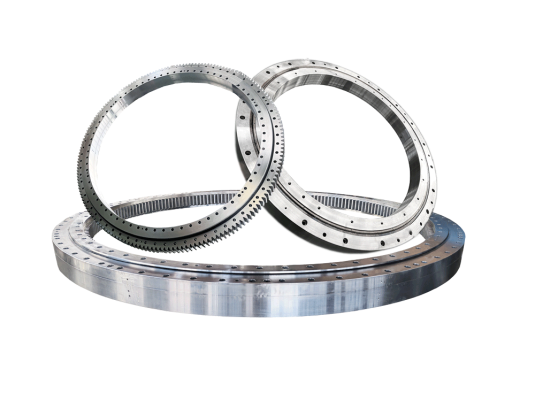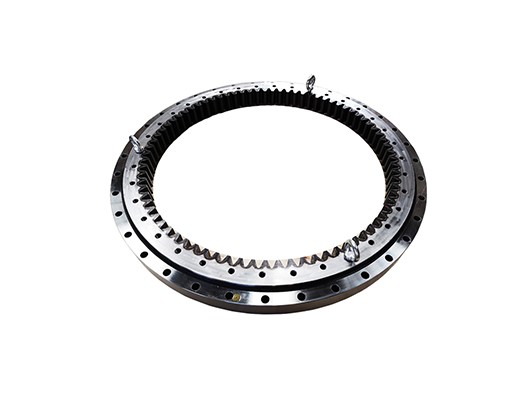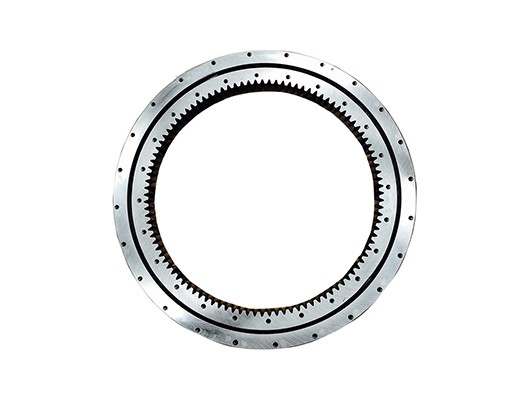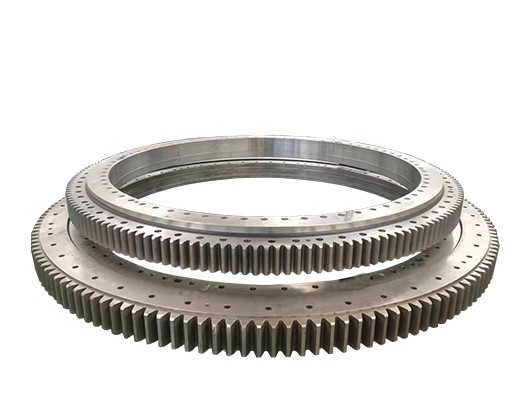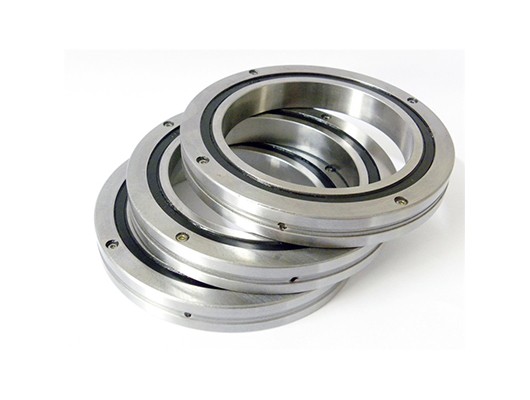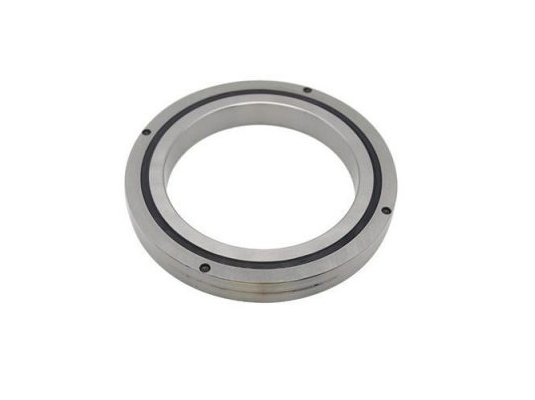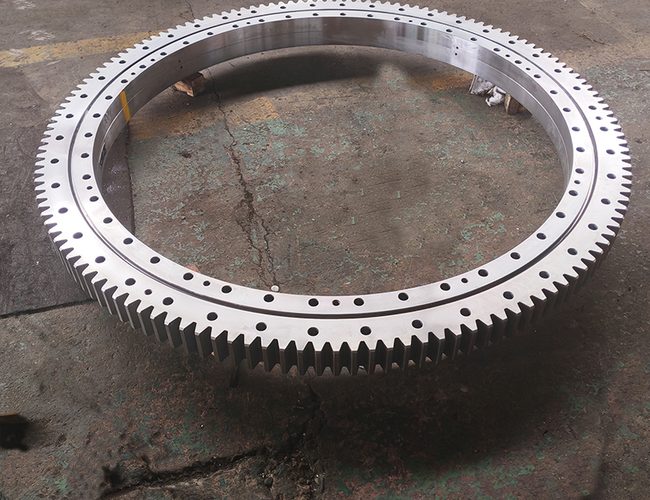
A slewing bearing — also called a slewing ring or turntable bearing — is the component that lets a machine's upper structure rotate while carrying the weight of everything mounted above it. Excavator cabs, crane superstructures, wind turbine nacelles and solar trackers all depend on one.
What makes these bearings unusual is the load case. A slewing bearing has to carry axial force, radial force and tilting moment at the same time, and the tilting moment is usually the parameter that governs the design. That is also why selection mistakes rarely appear as a clean overload: they show up as premature raceway spalling, gear tooth damage or loosened mounting bolts months after start-up.
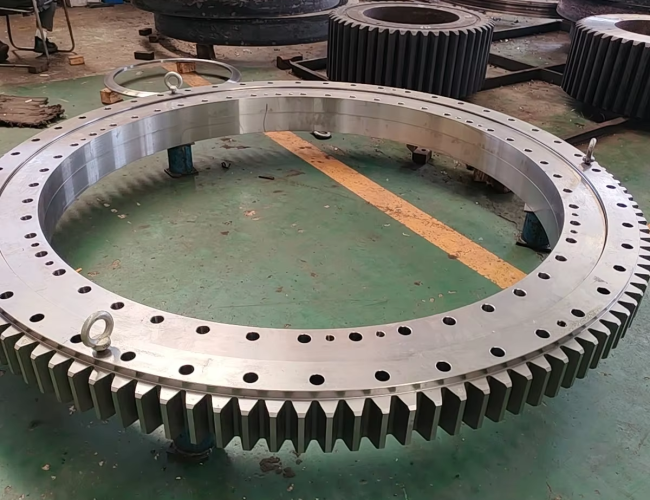
A slewing bearing is built from an inner ring and an outer ring with rolling elements — balls or cylindrical rollers — running in machined raceways. Most designs add integral gear teeth on the inner or outer ring so a pinion can drive rotation directly, which replaces a multi-bearing kingpost arrangement and saves weight, height and assembly work. Seals, grease fittings and mounting holes complete the unit.
Two dimensions matter more than the others. The raceway centre diameter defines load capacity, while total height determines how much structure the bearing adds. Bore diameter alone tells you very little, which is the first reason a slewing bearing cannot be selected the way a standard radial ball bearing is.
Rings are typically produced from hardened and tempered alloy steel such as 42CrMo, with induction-hardened raceways and defined soft zones left for gear cutting and bolt holes. Chinese-made product is usually specified to the JB/T 2300 series of standards .
| Type | Load capacity | Rigidity | Typical applications |
|---|---|---|---|
| Single-row four-point contact ball | Medium | Medium | Small and mid-size cranes, aerial work platforms, turntables |
| Double-row ball | High | High | Tower cranes, heavy mobile cranes, mining equipment |
| Single-row cross roller | Medium–high | Very high | Robot bases, CNC rotary tables, medical and radar equipment |
| Three-row roller | Very high | Very high | Large excavators, offshore cranes, tunnel boring machines |
Single-row four-point contact ball. A single row of balls runs in a gothic-arch raceway, so each ball touches the raceway at four points — two on the inner ring and two on the outer. That geometry carries axial, radial and moment loads in a compact cross-section, which makes it the default choice for moderate combined loading.
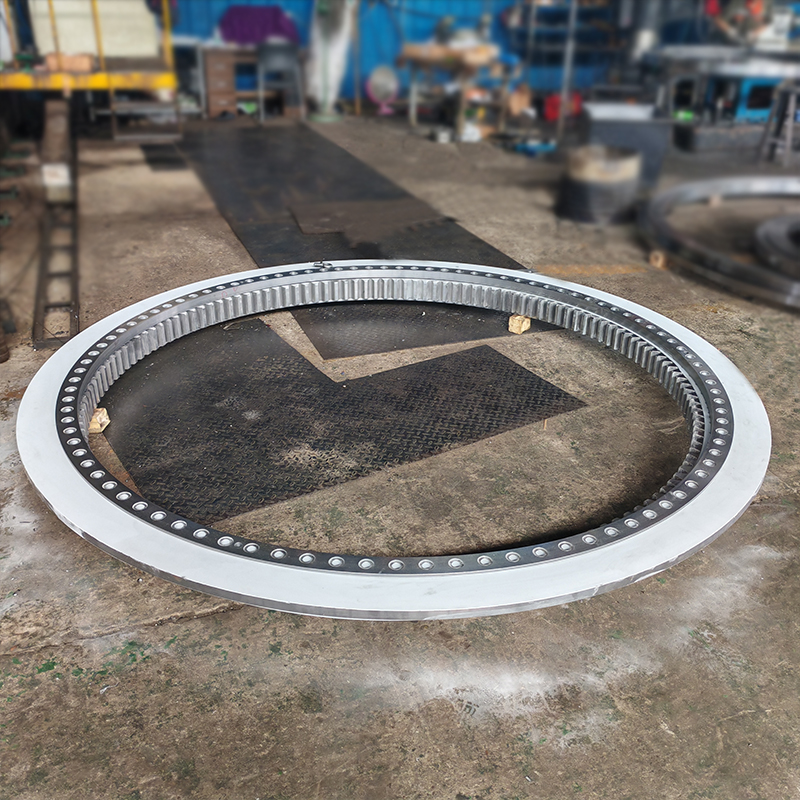
Double-row ball. A second row of rolling elements raises capacity and stiffness and provides a wider moment arm against tilting. Step up to this type when a single-row four-point contact bearing is running out of capacity but the application does not justify roller geometry.
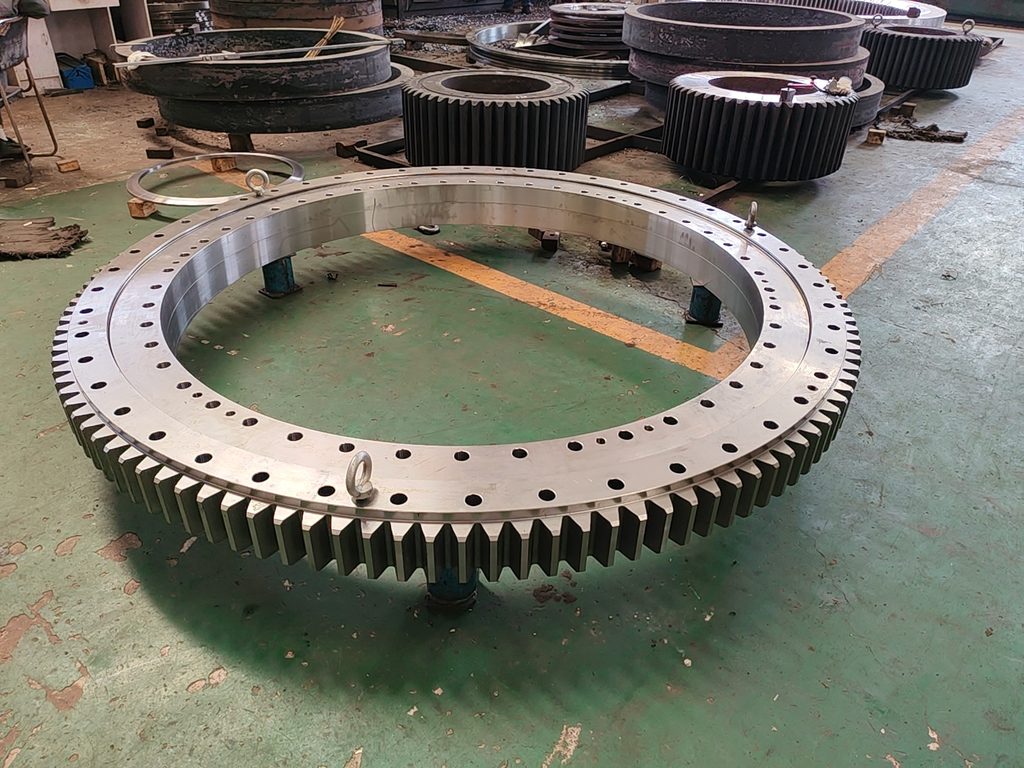
Single-row cross roller. Cylindrical rollers are arranged alternately at 90 degrees, so each roller sits perpendicular to its neighbour and contacts the raceway along a line rather than at a point. The result is high rigidity and rotational accuracy in a compact package, at a cost typically higher than an equivalent ball design. Choose it when angular deflection under load affects machine accuracy.
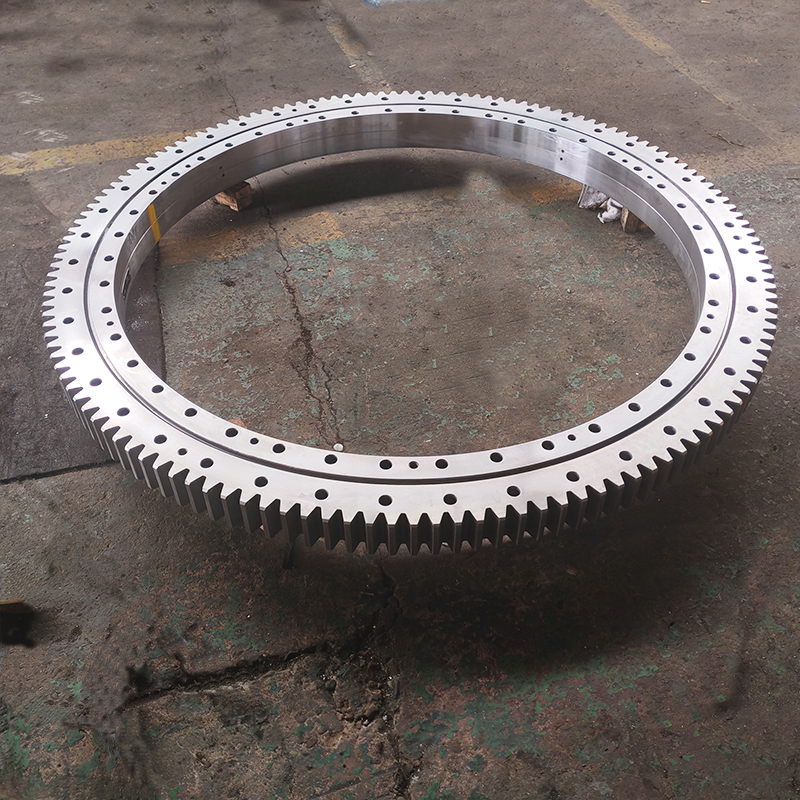
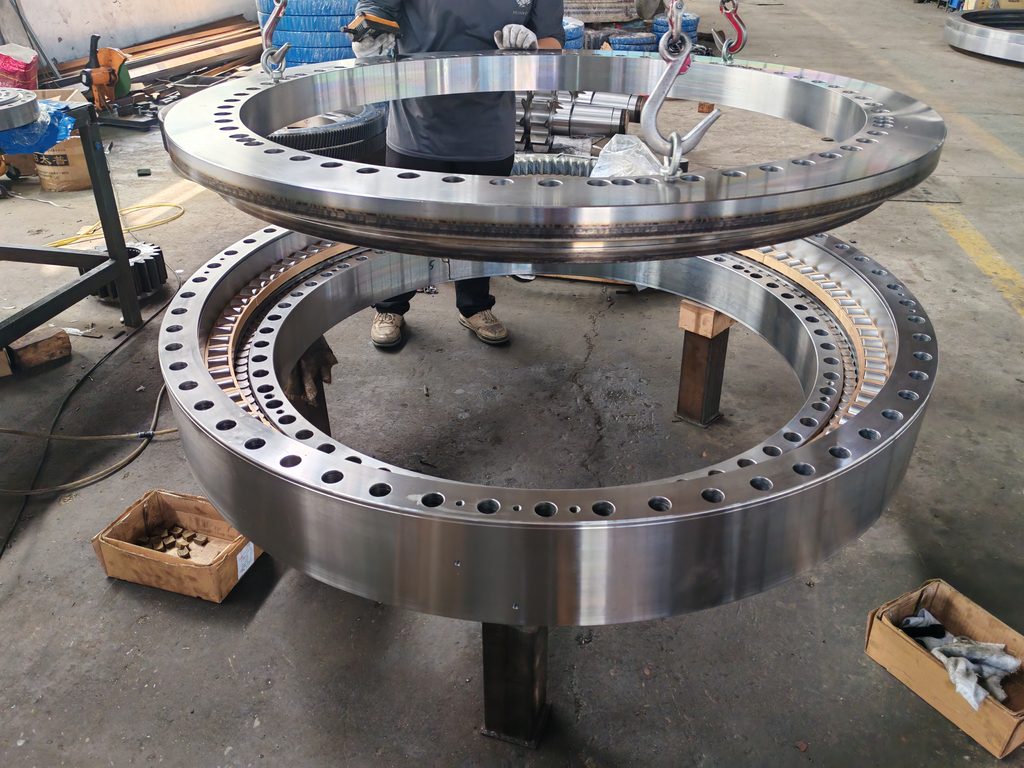
Three-row roller. Three separate rows handle axial load in each direction and radial load. Because each load path is sized for a single task, this is the highest-capacity configuration — the type used where loads are extreme and downtime is expensive.
Every type above can be supplied ungeared, with external gear teeth or with internal gear teeth. External gear is the most common choice for powered rotation because the pinion stays accessible for inspection and backlash adjustment. Internal gear suits machines where the driven structure wraps around the bearing.
Gear module and tooth count set the torque that can be transmitted and the achievable backlash. Mating pinions are commonly made from AISI 4140 steel hardened to 55–60 HRC, and backlash should be measured after mounting rather than assumed from the drawing.
Sealing is decided by the environment. A single-lip seal is adequate in clean indoor installations; dusty, wet, mining or coastal applications need multi-lip or labyrinth seals, often with surface treatment or stainless hardware. Contamination is the fastest route to raceway damage.
1. Build the load envelope. Calculate maximum axial load (Fa), radial load (Fr) and tilting moment (M) across all operating conditions, including wind, shock and off-centre loads. In most slewing applications M governs, not Fa.
2. Apply a static safety factor. Using the static load rating C0 and equivalent load P0, aim for S0 = C0/P0 of at least 1.5 under normal conditions and 2.0 or above where failure is a safety risk.
3. Check the load curves. Plot (Fa, M) and (Fr, M) against the manufacturer's capacity curves for the candidate raceway centre diameter. The point must fall inside the curve, not on it.
4. Choose type and cross-section. Match the type from the table above to your load level and rigidity requirement, then take the lightest cross-section that still passes.
5. Define the drive. Decide gear configuration, module and tooth count, then size the motor with margin: drive torque should be a multiple of calculated friction torque rather than equal to it, because friction rises as grease ages and dynamic loads add on top.
6. Verify the mounting. Bolt grade, bolt quantity and flange stiffness frequently limit the assembly. Both flanges must be flat and rigid, and the support structure needs enough hardness that bolts do not embed.
7. Close the environment loop. Sealing, coating, lubricant and internal clearance all follow from the operating temperature range and contamination level.
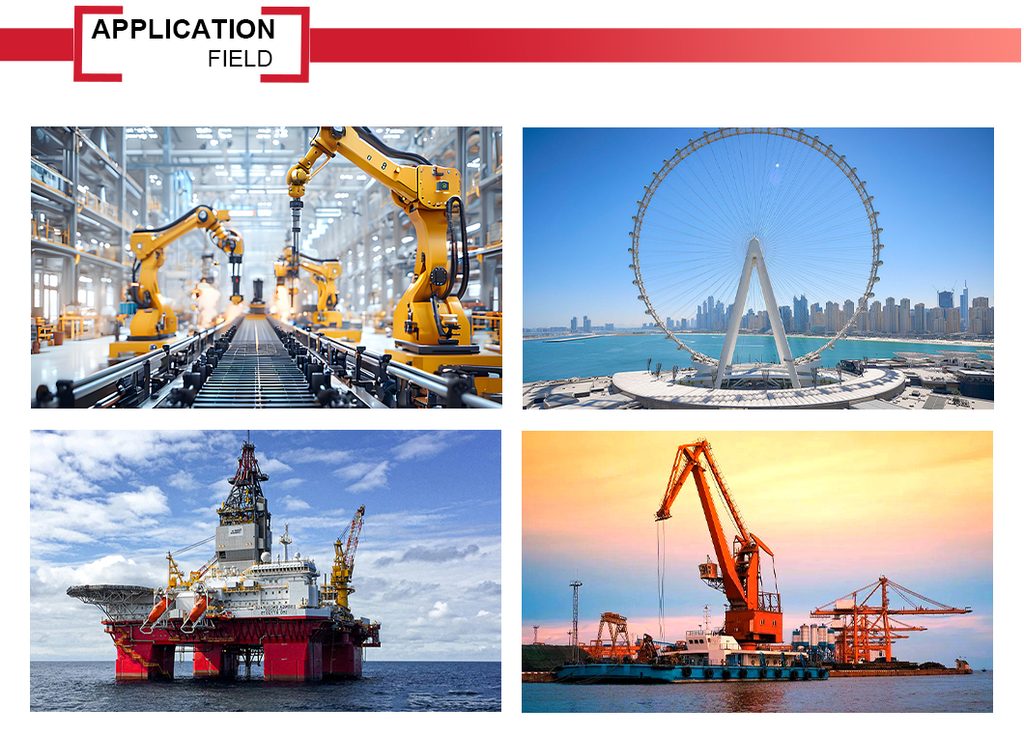
Construction machinery (excavators, cranes, concrete pumps), wind energy (one yaw bearing and three pitch bearings per turbine), solar tracking, robotics and CNC rotary tables, medical imaging gantries, radar and antenna pedestals, port and offshore cranes, and tunnelling equipment.
Luoyang Hengchang Heavy Machinery Co., Ltd. is an entity manufacturer of slewing bearings and customized non-standard machining parts. Our company integrates professional design, research and development, manufacturing, sales and service. Relying on the strong manufacturing capacity and research and development capacity, we can provide customers with one-to-one customized services and solutions.
If you have any inqury or questions for our products, please feel to contact us.
Stacker reclaimer is a large-scale bulk material conveying equipment widely used in ports, electric power, coal, metallurgy and other industries.
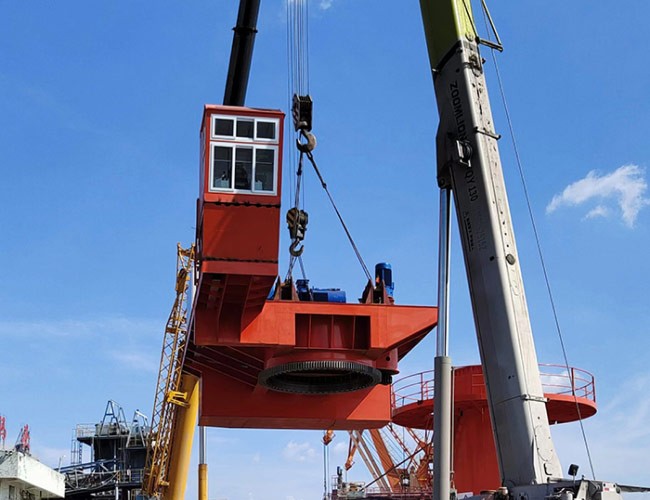
After a tense and orderly 40-day production cycle, our company successfully delivered this product to the user’s site;
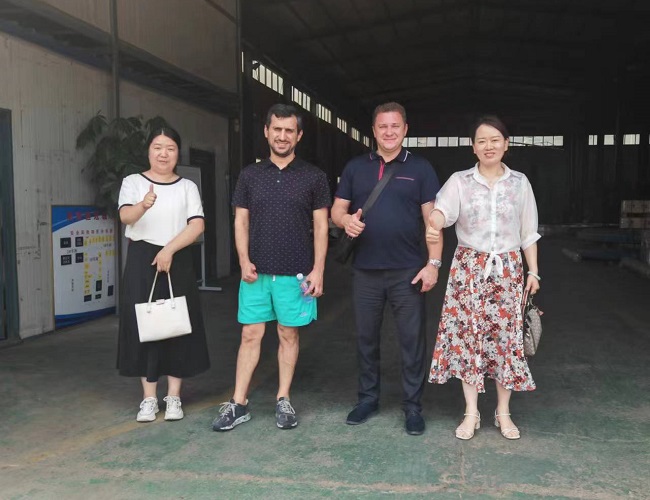
This crane slewing bearing needs to be certified by a third-party Russian ship inspection agency according to the requirements of the shipowner.

Submit Request
PDF Request
Simply fill out the form below and the catalog will be available for download!