Port container cranes and bulk-material conveyor systems never get an easy day. A ship-to-shore (STS) crane hoists fifty-ton containers in a salt-laden harbor breeze; a conveyor at a dry-bulk terminal runs around the clock under shock loads and abrasive dust. In both worlds, the gear shaft is the component that quietly transmits every newton-meter of torque between the motor and the driven machine — and when it fails, the whole terminal stops.
That is why heavy-duty gear shafts are engineered the way they are: not as an afterthought, but as the load-bearing backbone of the entire drivetrain. Here is what goes into a gear shaft that can survive port and conveyor duty — and what to look for when you spec one.
In a port container crane, gear shafts sit at the heart of every motion:
In conveyor systems, the picture is similar but different in rhythm: gear shafts drive the speed reducers behind belt conveyor head pulleys and drive drums at bulk terminals, cement plants, and mining stockyards. The duty is less dramatic but unrelenting — continuous hours, high radial loads, and abrasive contamination that never stops trying to get inside.
What both applications share is a demand for torsional strength, fatigue resistance, and dimensional accuracy under sustained heavy load.
Traditional designs shrink a gear onto a shaft with a press fit or keyed connection. That works — until the port calls. Under cyclic loading, the interface between two separate parts becomes a stress concentration point, a source of alignment error, and eventually a fatigue failure waiting for the busiest day of the season.
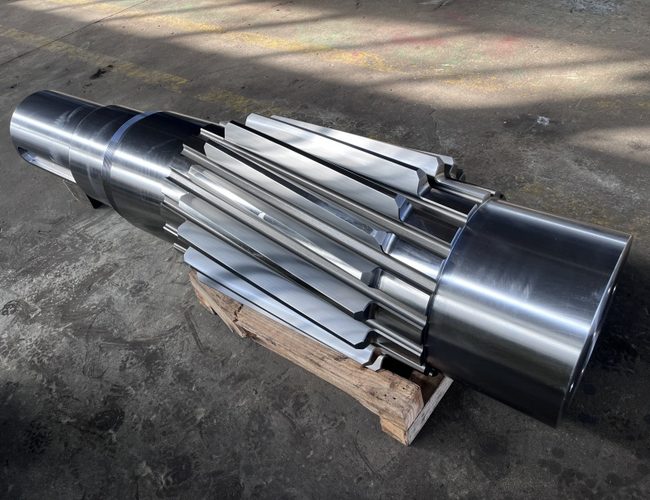
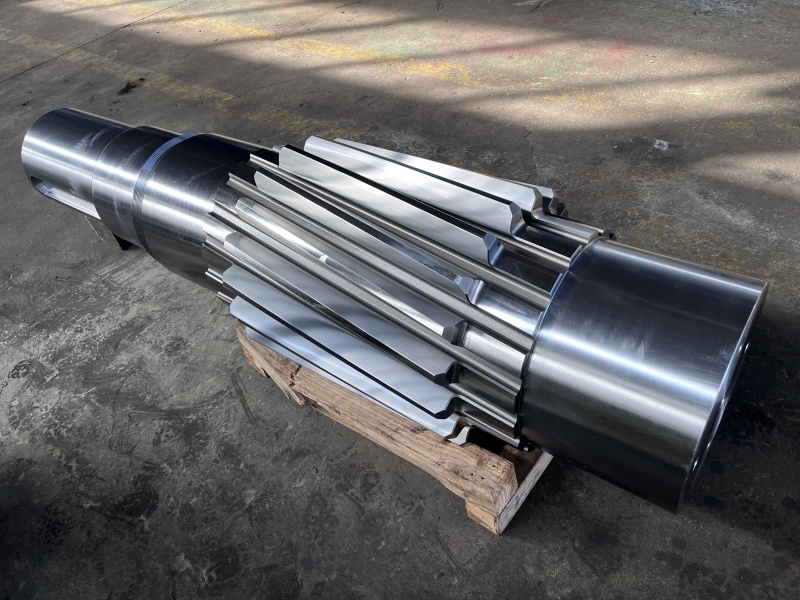
A one-piece integrated gear shaft machines the gear and the shaft from the same forging, eliminating the joint entirely. The benefits compound in real service:
Not every machine shop can make a port-grade gear shaft. The metallurgy and heat treatment are where the margin between a good shaft and a failed one is decided.
For heavy-duty transmission shafts, the proven material family is through-hardening and case-hardening alloy steels:
| Parameter | Typical specification |
|---|---|
| Base materials | 42CrMo, 20CrMnTi, 40Cr alloy steel |
| Core hardness (after heat treatment) | HRC 28–32 |
| Tooth surface hardness (after carburizing) | HRC 58–62 |
| Gear accuracy grade | GB 5–6 (ISO equivalent) |
| Shaft diameter range | φ100 mm – φ1000 mm |
| Total length range | 100 mm – 3000 mm |
| Gear module | M3 – M20, customizable |
| Unit weight | 5 kg – 500 kg |
| Connection types | Keyway (DIN/ANSI), involute spline, flange |
| Tooth profile options | Spur, helical, bevel |
The combination of a carburized, hardened tooth surface (HRC 58–62) and a tough core (HRC 28–32) is the classic answer to two competing demands: the tooth flank must resist wear and contact fatigue over millions of cycles, while the shaft body must absorb shock without brittle fracture. Add filleted shoulder transitions with calculated radii, and you suppress the stress concentration that drives fatigue cracking under cyclic hoisting loads.
Precision matters just as much. CNC-ground bearing seats holding concentricity within 0.01 mm keep the shaft true in the gearbox, which means lower vibration, quieter operation, and measurably longer bearing life in the final assembly.
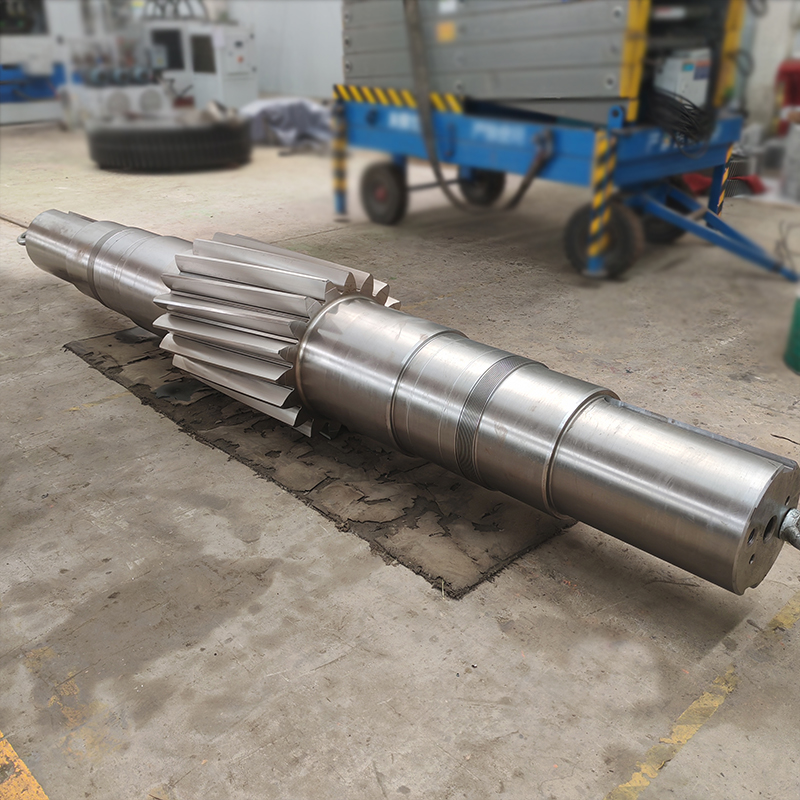
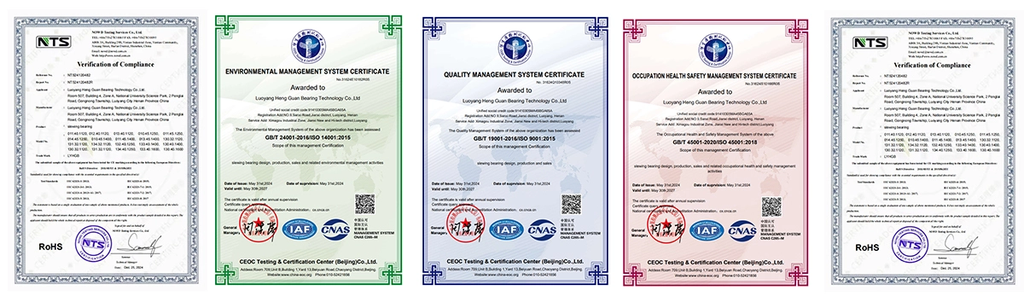
A heavy-duty gear shaft earns trust in the test lab, not just on the drawing board. A reputable manufacturer verifies every piece before it ships:
ISO 9001 quality systems and RoHS compliance are the baseline for export-grade supply.
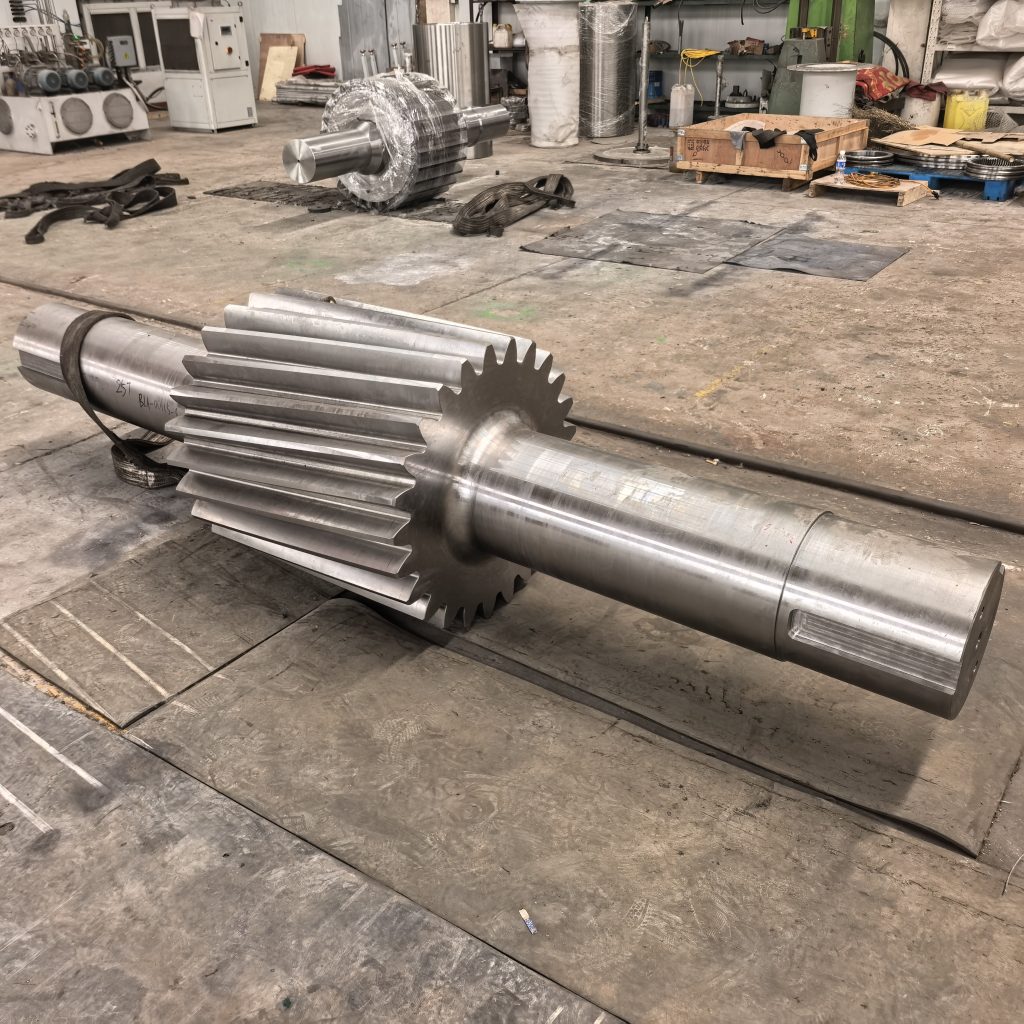
Here is a reality of the port and material-handling market: no two cranes or conveyor lines are identical. Gear shafts are almost always engineered-to-order components, manufactured from the customer's 2D/3D drawings — or reverse-engineered from samples when the original drawings no longer exist.
The right supplier should offer:
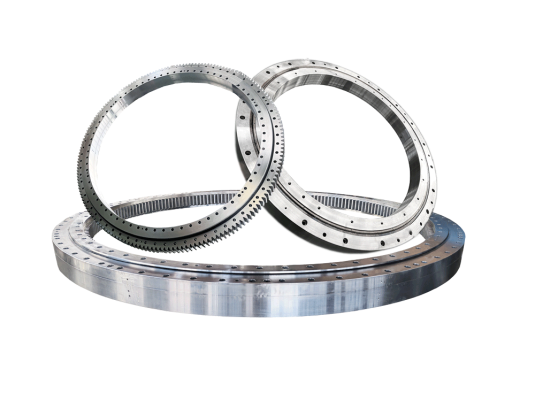
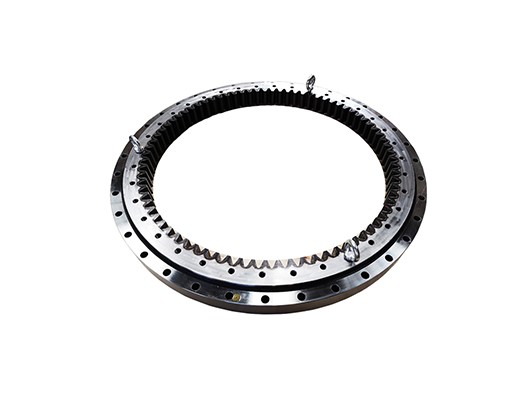
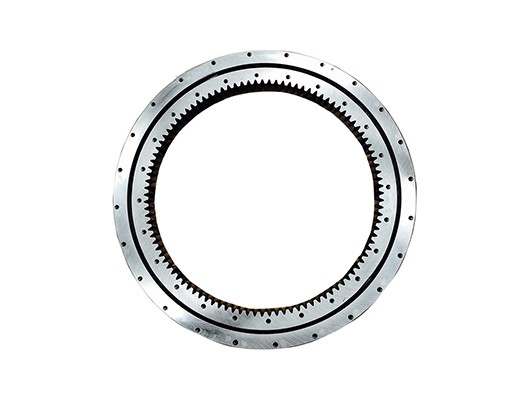
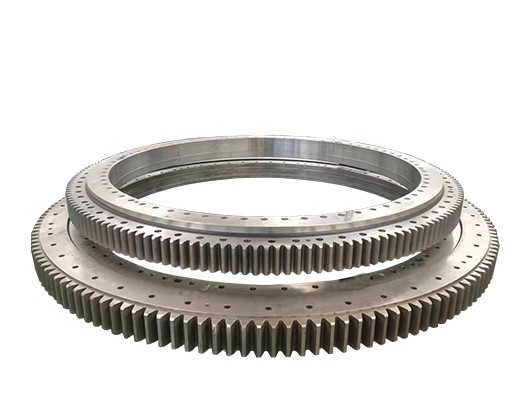
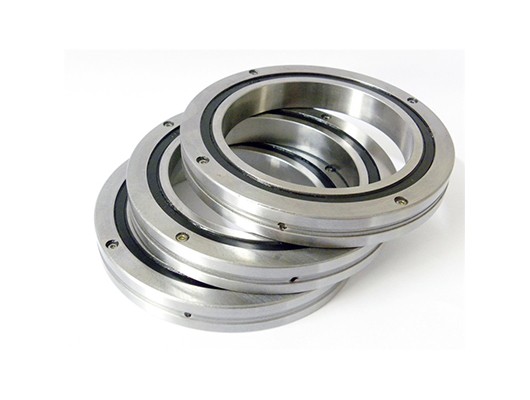
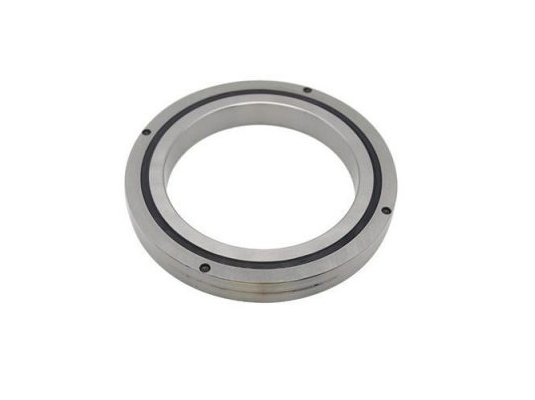
A port crane or conveyor line is a system, and its rotating components are designed to work together. The same engineering that goes into our pinion gear shafts, large precision gear shafts, and crusher/gearbox shafts also drives our companion product lines — port crane slewing bearings, gear rings with pinions, and large forged rings. When the gear shaft, the pinion it meshes with, and the slewing bearing under the crane all come from one manufacturer with one quality system, compatibility issues and finger-pointing disappear from the procurement chain.
Before you send an inquiry, have these points ready:
Heavy-duty gear shafts for port container cranes and conveyors are not off-the-shelf parts — they are engineered commitments to uptime. Work with a manufacturer that has the metallurgy, the machine tools, the test equipment, and the 20+ years of experience to stand behind them.
Luoyang Hengchang Heavy Machinery Co., Ltd. is an entity manufacturer of slewing bearings and customized non-standard machining parts. Our company integrates professional design, research and development, manufacturing, sales and service. Relying on the strong manufacturing capacity and research and development capacity, we can provide customers with one-to-one customized services and solutions.
If you have any inqury or questions for our products, please feel to contact us.
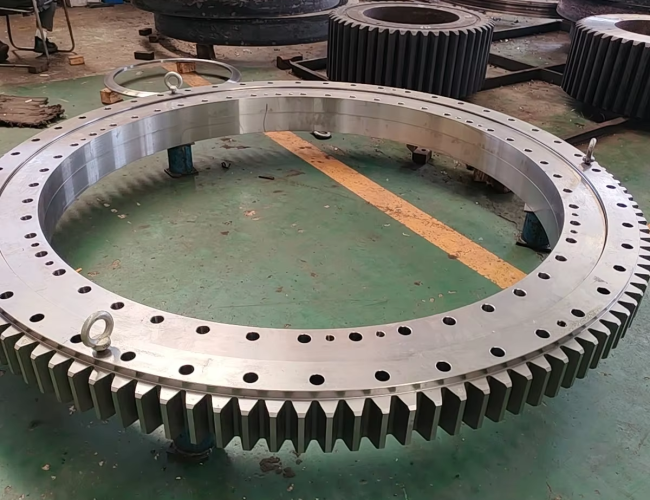
Stacker reclaimer is a large-scale bulk material conveying equipment widely used in ports, electric power, coal, metallurgy and other industries.
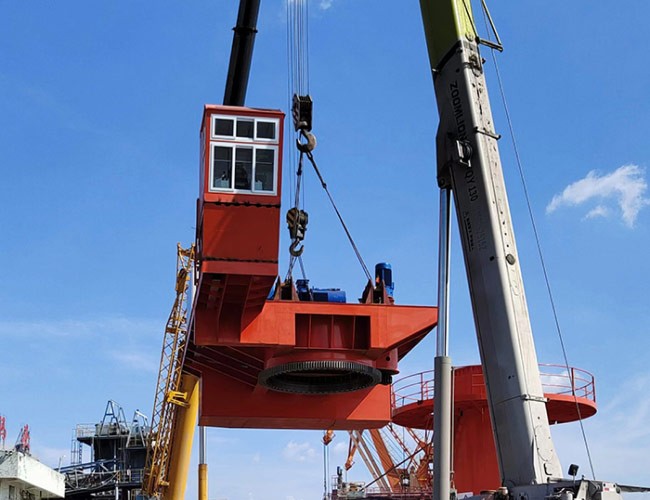
After a tense and orderly 40-day production cycle, our company successfully delivered this product to the user’s site;
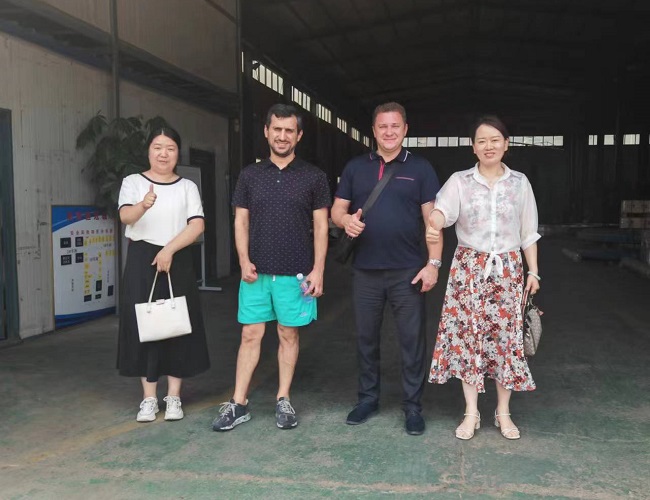
This crane slewing bearing needs to be certified by a third-party Russian ship inspection agency according to the requirements of the shipowner.

Submit Request
PDF Request
Simply fill out the form below and the catalog will be available for download!