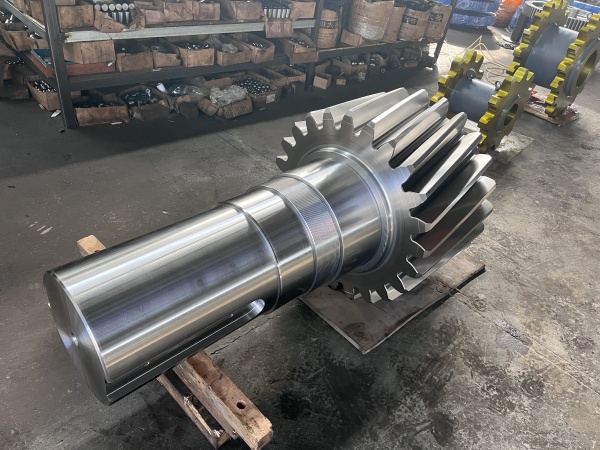
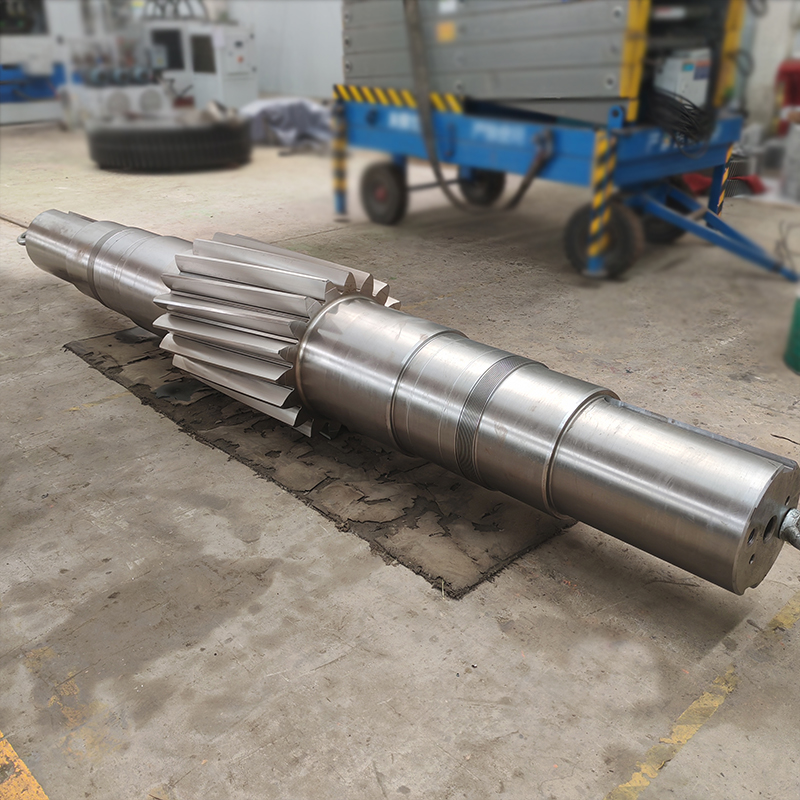
Large gear shafts are the backbone components of heavy industrial equipment such as ball mills, rotary kilns, conveyors, wind turbines, and mining crushers. When a large gear shaft fails prematurely, the consequences are severe: unplanned downtime, exorbitant repair costs, and even potential safety hazards.
But why do these components—designed to be rugged and durable—often fail long before reaching their intended service life?
By examining real-world operating conditions, this article delves into the most common root causes of premature failure in large gear shafts. A thorough understanding of these causes will not only help you diagnose current failures accurately but also guide you toward better design and material selection when customizing your next batch of shafts.
Failure Characteristics:
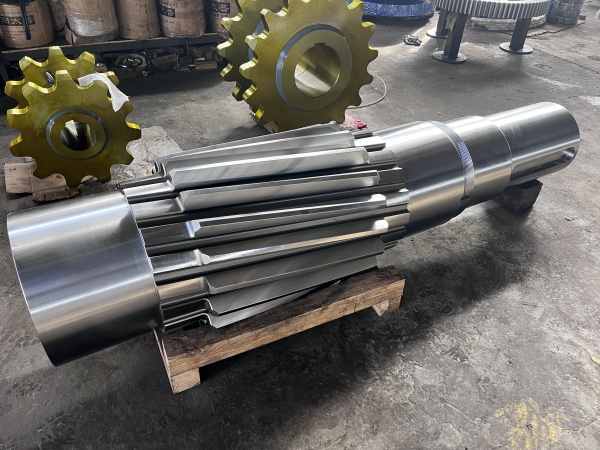
A spiral or helical fracture pattern, with cracks typically originating at keyways or sharp corners, often at a 45-degree angle to the shaft axis.
Cause Analysis:
Large gear shafts operating under heavy loads are often subjected to alternating or pulsating torque. Stress concentrates readily at locations where geometry changes abruptly—such as keyway ends, oil holes, shoulder fillets, or radial cross-holes. After millions of load cycles, microscopic cracks initiate at these stress concentration points and gradually propagate.
Real-World Case:
A gear shaft in a cement mill failed just two years into service. Fracture analysis revealed a classic torsional fatigue pattern, with the crack origin located at a keyway corner where the fillet radius was designed insufficiently.
Failure Characteristics:
A flat fracture surface perpendicular to the shaft axis, often with visible arrest lines (beach marks) on the surface.
Cause Analysis:
Misalignment between the gear shaft and connected equipment (motor, gearbox, or driven load) generates a bending moment that reverses with every rotation. Even 0.5 mm of offset can cause a dramatic increase in stress on a large shaft.
Real-World Case:
A mining conveyor gear shaft fractured at the bearing journal. On-site inspection showed 0.8 mm of radial runout caused by foundation settlement—enough bending stress to exceed the material's fatigue limit.
Failure Characteristics:
Intergranular cracks, quench cracks along the shaft surface, or non-uniform hardness distribution across the cross-section.
Cause Analysis:
Large gear shafts typically undergo through-hardening or case hardening. If the quenching cooling rate is too rapid, or if the shaft's cross-sectional thickness varies unevenly, the resulting thermal stresses may exceed the material's plastic limit, initiating cracks.
Real-World Case:
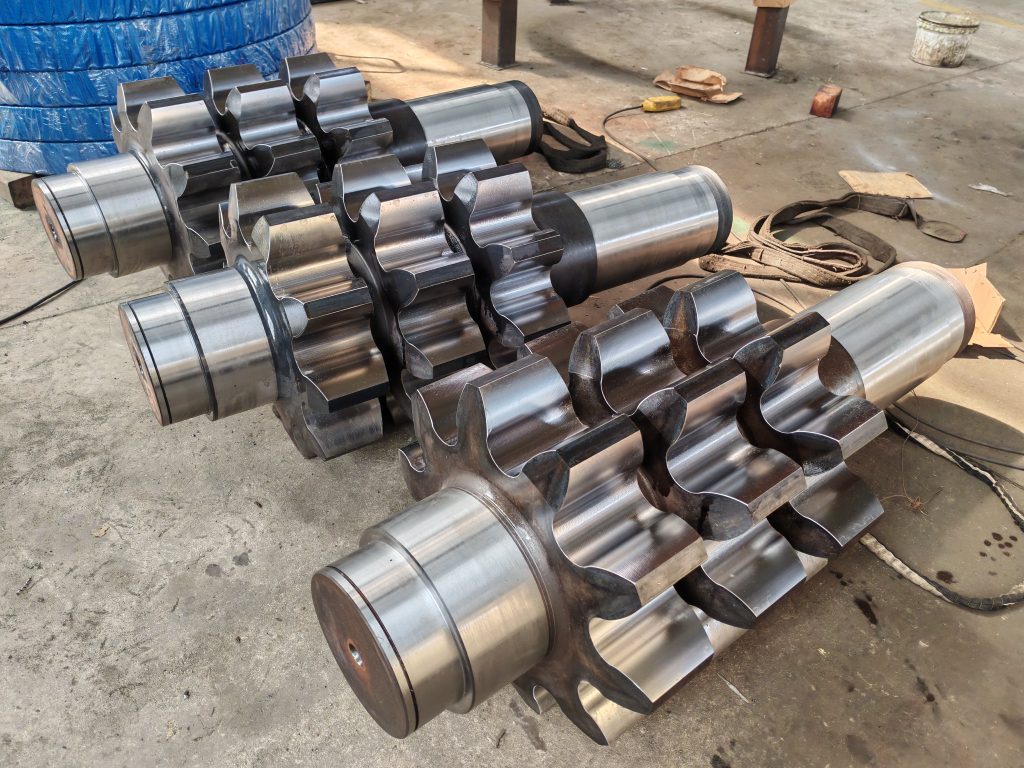
A 300 mm diameter ball mill gear shaft developed surface cracks after induction hardening. Investigation revealed that localized overheating occurred during the induction scanning process, combined with insufficient preheating.
Typical Signs:
Keyway wear, hammer marks, bearing seizure marks, or damage caused during assembly.
Cause Analysis:
Large gear shafts are extremely heavy, making improper handling during installation a common problem. Operations such as hammering a gear forcibly onto the shaft, using an undersized key, or overtightening locking assemblies all lead to localized stress concentrations.
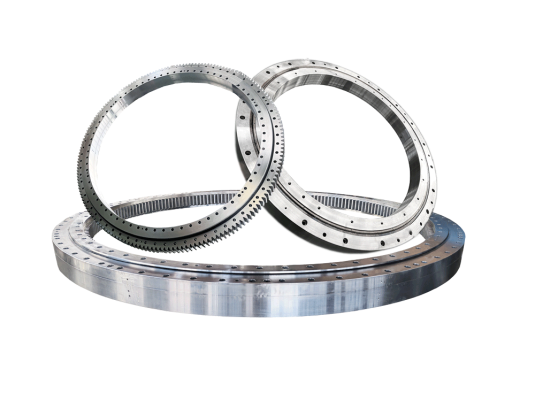
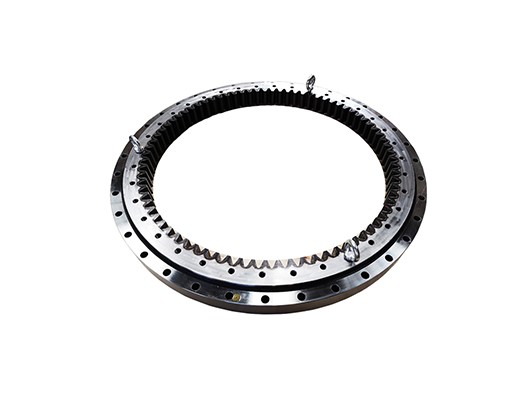
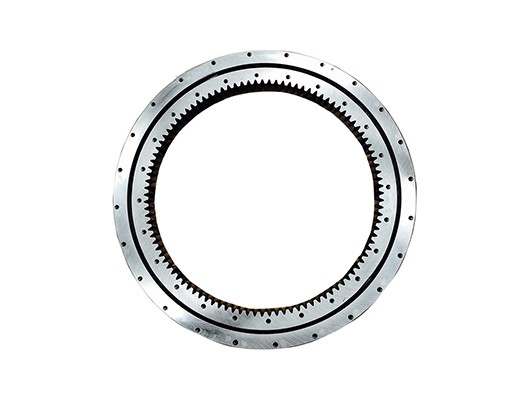
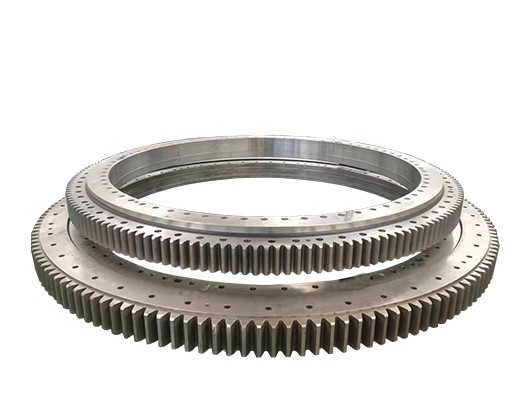
Luoyang Hengchang Heavy Machinery Co., Ltd. is an entity manufacturer of slewing bearings and customized non-standard machining parts. Our company integrates professional design, research and development, manufacturing, sales and service. Relying on the strong manufacturing capacity and research and development capacity, we can provide customers with one-to-one customized services and solutions.
If you have any inqury or questions for our products, please feel to contact us.
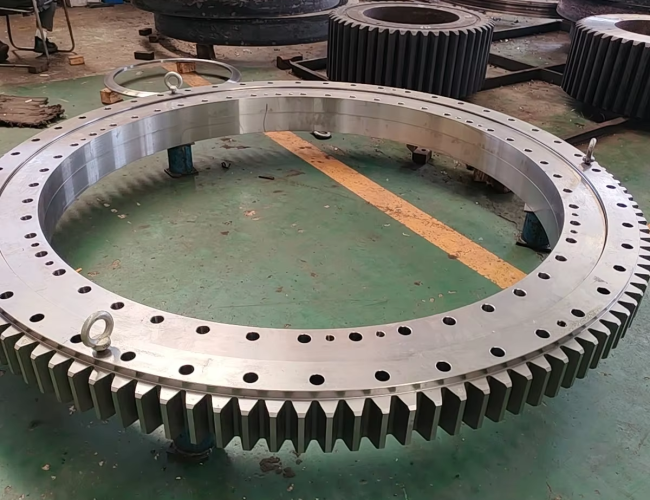
Stacker reclaimer is a large-scale bulk material conveying equipment widely used in ports, electric power, coal, metallurgy and other industries.
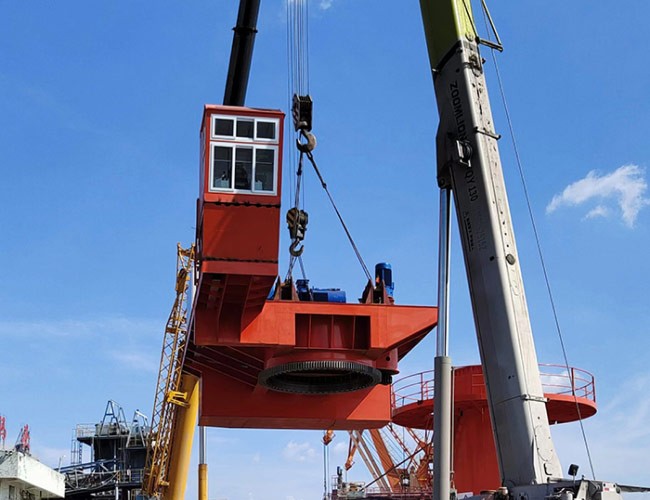
After a tense and orderly 40-day production cycle, our company successfully delivered this product to the user’s site;
This crane slewing bearing needs to be certified by a third-party Russian ship inspection agency according to the requirements of the shipowner.

Submit Request
PDF Request
Simply fill out the form below and the catalog will be available for download!